Thursday, July 28, 2011

Future Luxury That Turns Dreams Into Reality

FUTURE LUXUTARY THAT TURNS  DREAMS INTO REALITY

Have you ever wondered what luxuries the near future holds? This entry takes a look at what’s to be expected, and some of them are dream come true experiences, that turn fantasy into reality…

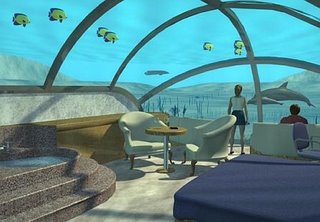
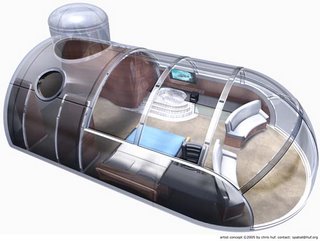
Poseidon Underwater Resort – From $1,500 per night


The world’s first undersea luxury resort! Fantasy movies and our fascination with ocean life; have long manifested a dream within every person to experience what it’s like to live under water. That is about to become a reality! Just off the coast of a private island in Fiji, Submarine engineers are constructing the world's first permanent sea floor resort that will truly capture the imagination of millions of people. The Poseidon Underwater Resort expects to open in a few years, and offers 6-star luxury suites with extraordinaire reef views and a chance to relax in the calmest place on earth.

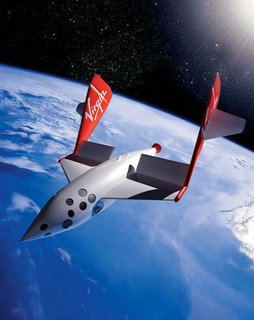
Virgin Galactic Space Trip – $1.74 million
Another dream comes true! Imagine being shot 63 miles into space, floating weightlessly, and getting a most spectacular view of earth? This sounds impossible, right? Well, forget about becoming an astronaut to go to space, space travel is launching much sooner than you think. In 2008 Virgin will debut its galactic space trips, so that any ordinary person can get a glimpse of the most sought after view in the galaxy. Apparently, Angelina Jolie and Brad Pitt have already signed up for the 2008 launch, which will be the first. You can only imagine their anticipation!


Z-Island Kitchen – Price Unknown
Designed by
Zaha Hadid


A look at the future! Although this kitchen might look as if it’s from a movie scene, set in the far distant future, it is actually a contemporary design of what kitchens aspire to becoming. Designed by Zaha Hadid, the Z-Island Kitchen represents an ultramodern and luxurious creation that truly captures the imagination. With kitchens like this, the excitement is ever growing to see what kitchen designs it will influence, and inspire.

Top ten Mysterious World Landmarks

The world is filled with ancient monuments built by master craftsmen in order to honor everything from kings and presidents to religious figures. And although most of these landmarks have been carefully studied and researched by scientists and historians, some are simply so old, incomplete, or obscure that we still don’t know very much about why they were built or what purpose they served. The following are 10 world landmarks that, whether by intention or simply due to the passage of time, continue to baffle the people who study them.

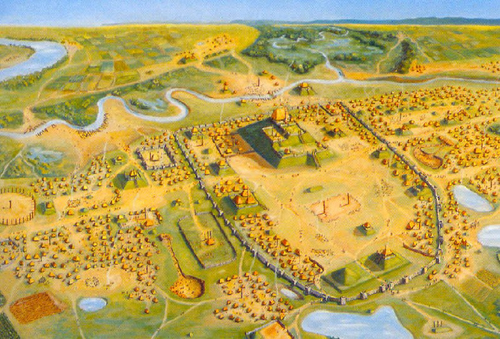
10. The Cahokia Mounds


Cahokia is the name given to an Indian settlement that exists outside of Collinsville, Illinois. Archeologists estimate that the city was founded sometime around 650 AD, and its complex network of burial grounds and sophisticated landscaping prove that it was once a thriving community. It has been estimated that at its peak the city was home to as many as 40,000 people, which would have made it the most populous settlement in America prior to the arrival of the Europeans. The most notable aspect of Cahokia today are the 80 mounds of earth, some as high as 100 feet, which dot the 2,200-acre site. These helped create a network of plazas throughout the city, and it is believed that important buildings, like the home of the settlement’s chief, were built on top of them. The site also features a series of wooden posts that archeologists have dubbed “woodhenge.” The posts are said to mark the solstices and equinoxes, and supposedly figured prominently in the community’s astronomical mythology.
The Mystery
Although scientists are constantly discovering new information about the Cohokia community, the biggest mystery that remains is which modern Indian tribe is descended from the residents of the ancient city, as well as just what it was that caused them to abandon their settlement.

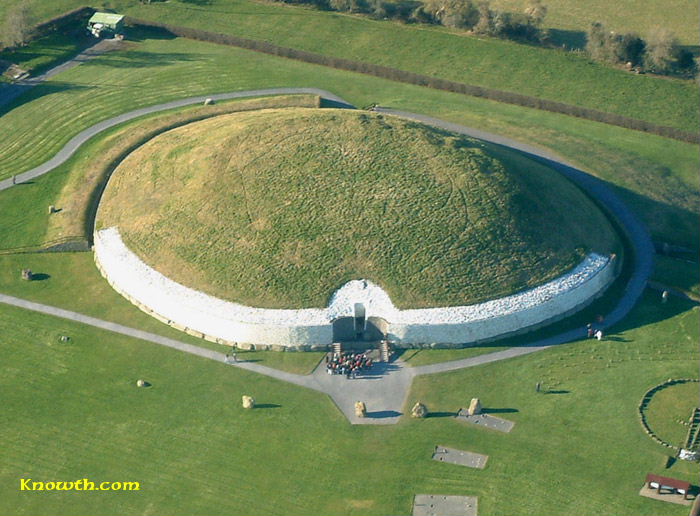
9. Newgrange


Considered to be the oldest and most famous prehistoric site in all of Ireland, Newgrange is a tomb that was built from earth, wood, clay, and stone around 3100 BC, some 1000 years before the construction of the pyramids in Egypt. It consists of a long passage that leads to a cross-shaped chamber that was apparently used as a tomb, as it contains stone basins filled with cremated remains. The most unique feature of Newgrange is its careful and sturdy design, which has helped the structure remain completely waterproof to this day. Most amazing of all, the entrance to the tomb was positioned relative to the sun in such a way that on the winter solstice, the shortest day of the year, the rays from the sun are channeled through the opening and down the nearly 60 foot passageway, where they illuminate the floor of the monument’s central room.
The Mystery
Archeologists know Newgrange was used as a tomb, but why and for who still remains a mystery. The painstaking design needed to guarantee that the yearly solstice event occurs suggests that the site was held in high regard, but other than the obvious hypothesis that the sun featured prominently in the mythology of the builders, scientists are at a loss to describe the true reason for Newgrange’s construction.


8. The Yonaguni Monument

Of all the famous monuments in Japan, perhaps none is more perplexing than Yonaguni, an underwater rock formation that lies off the coast of the Ryuku Islands. It was discovered in 1987 by a group of divers who were there to observe Hammerhead sharks, and it immediately sparked a huge amount of debate in the Japanese scientific community. The monument is made up of a series of striking rock formations including massive platforms, carved steps, and huge stone pillars that lie at depths of 5-40 meters. There is a triangular formation that has become known as “the turtle” for its unique shape, as well as a long, straight wall that borders one of the larger platforms. The currents in the area are known for being particularly treacherous, but this has not stopped the Yonaguni monument from becoming one of the most popular diving locations in all of Japan.
The Mystery
The ongoing debate surrounding Yonaguni centers on one key subject: is the monument a natural phenomenon, or is it man-made? Scientists have long argued that millennia of strong currents and erosion have carved the formations out of the ocean floor, and they point to the fact that the monument is all one piece of solid rock as proof that it was not assembled by a builder. Others, though, point to the many straight edges, square corners and 90-degree angles of the formation as proof that it’s artificial. They often cite one formation in particular, a section of rock that resembles a crude carving of a human face, as evidence. If they are right, then an even more interesting mystery presents itself: who constructed the Yonaguni Monument, and for what purpose?

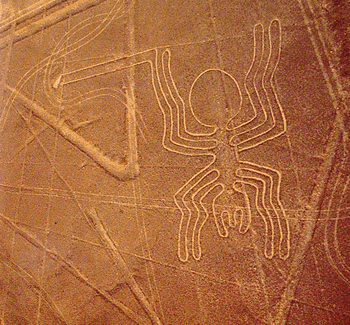
7. The Nazca Lines


The Nazca lines are a series of designs and pictographs carved into the ground in the Nazca Desert, a dry plateau located in Peru. They cover an area of some 50 miles, and were supposedly created between 200 BC and 700 AD by the Nazca Indians, who designed them by scraping away the copper colored rocks of the desert floor to expose the lighter-colored earth beneath. The lines have managed to remain intact for hundreds of years thanks to the region’s arid climate, which sees it receive little rain or wind throughout the year. Some of the lines span distances of 600 feet, and they depict everything from simple designs and shapes to characterizations of plants, insects, and animals.
The Mystery
Scientists know who made the Nazca Lines and how they did it, but they still don’t know why. The most popular and reasonable hypothesis is that the lines must have figured in the Nazca people’s religious beliefs, and that they made the designs as offerings to the gods, who would’ve been able to see them from the heavens. Still, other scientists argue that the lines are evidence of massive looms that the Nazcas used to make textiles, and one investigator has even made the preposterous claim that they are the remnants of ancient airfields used by a vanished, technologically advanced society.

6. Goseck Circle


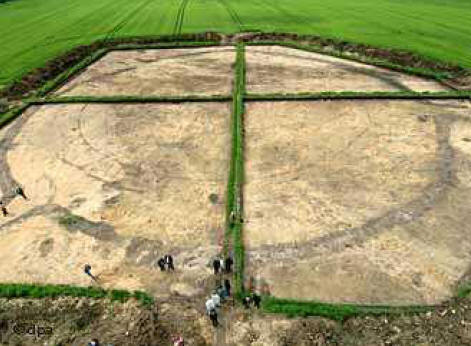
One of the most mysterious landmarks in Germany is the Goseck Circle, a monument made out of earth, gravel, and wooden palisades that is regarded as the earliest example of a primitive “solar observatory.” The circle consists of a series of circular ditches surrounded by palisade walls (which have since been reconstructed) that house a raised mound of dirt in the center. The palisades have three openings, or gates, that point southeast, southwest, and north. It is believed that the monument was built around 4900 BC by Neolithic peoples, and that the three openings correspond to the direction from which the sun rises on the winter solstice.
The Mystery
The monument’s careful construction has led many scientists to believe that the Goseck Circle was built to serve as some kind of primitive solar or lunar calendar, but its exact use is still a source of debate. Evidence has shown that a so-called “solar cult” was widespread in ancient Europe. This has led to speculation that the Circle was used in some kind of ritual, perhaps even in conjunction with human sacrifice. This hypothesis has yet to be proven, but archeologists have uncovered several human bones, including a headless
skeleton, just outside the palisade walls.

5. Sacsayhuaman


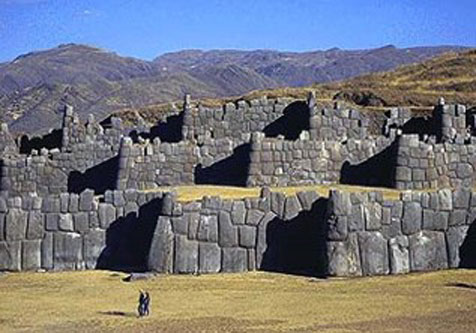
Not far from the famous Inca city of Machu Picchu lies Sacsayhuaman, a strange embankment of stone walls located just outside of Cuzco. The series of three walls was assembled from massive 200-ton blocks of rock and limestone, and they are arranged in a zigzag pattern along the hillside. The longest is roughly 1000 feet in length and each stands some fifteen feet tall. The monument is in astonishingly good condition for its age, especially considering the region’s propensity for earthquakes, but the tops of the walls are somewhat demolished, as the monument was plundered by the Spanish to build churches in Cuzco. The area surrounding the monument has been found to be the source of several underground catacombs called chincanas, which were supposedly used as connecting passageways to other Inca structures in the area.
The Mystery
Most scientists agree that Sacsayhuaman served as a kind of fortress of barrier wall, but this has been disputed. The strange shape and angles of the wall have led some speculate that it may have had a more symbolic function, one example being that the wall, when seen next to Cuzco from above, forms the shape of the head of a Cougar. Even more mysterious than the monument’s use, though, are the methods that were used in its construction. Like most Inca stone works, Sacsayhuaman was built with large stones that fit together so perfectly that not even a sheet of paper can be placed in the gaps between them. Just how the Incas managed such expert placements, or, for that matter, how they managed to transport and lift the heavy hunks of stone, is still not fully known.


4. The Easter Island Moai


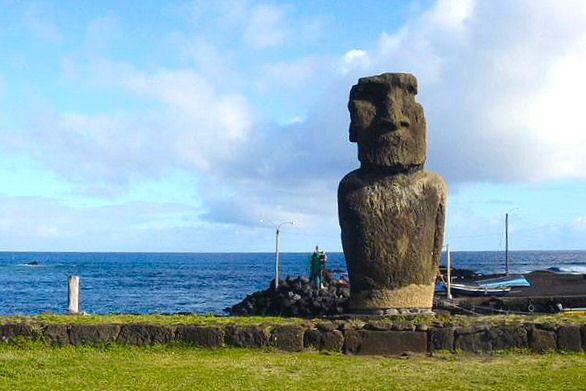
One of the most iconic series of monuments in the Pacific islands is the Moai, a group of huge statues of exaggerated human figures that are found only on the small, isolated island of Rapa Nui, or Easter Island. The Moai were carved sometime between 1250 and 1500 AD by the island’s earliest inhabitants, and are believed to depict the people’s ancestors, who in their culture were held in the same regard as deities. The Moai were chiseled and carved from tuff, a volcanic rock that is prevalent on the island, and they all feature the same characteristics of an oversized head, broad nose, and a mysterious, indecipherable facial expression. Scientists have determined that as many as 887 of the statues were originally carved, but years of infighting among the island’s clans led to many being destroyed. Today, only 394 are still standing, the largest of which is 30 feet tall and weighs over 70 tons.
The Mystery
While there is a fairly solid consensus on why the Moai were erected, how the islanders did it is still up for debate. The average Moai weighs several tons, and for years scientists were at a loss to describe how the monuments were transported from Rano Raraku, where most of them were constructed, to their various locations around the island. In recent years, the most popular theory is that the builders used wooden sleds and log rollers to move the Moai, an answer that would also explain how the once verdant island became almost totally barren due to deforestation.


3. The Georgia Guidestones


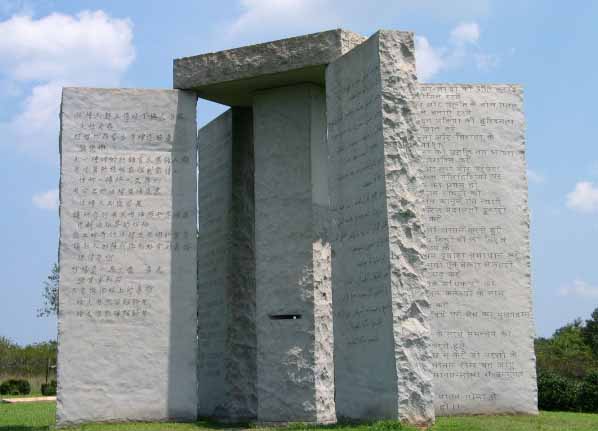
While most of the mysterious monuments on this list only became that way as centuries passed, the Georgia Guidestones, also known as American Stonehenge, are one landmark that was always intended to be an enigma. The monument, which consists of four monolithic slabs of granite that support a single capstone, was commissioned in 1979 by a man who went by the pseudonym of R.C. Christian. A local mason carefully crafted it so that one slot in the stones is aligned with the sun on the solstices and equinoxes, and one small hole is always pointed in the direction of the North Star. Most interesting, though, are the inscriptions on the slabs, which an accompanying plaque describes as “the guidestones to an Age of Reason.” In eight different languages, the slabs offer a strange ten-point plan to ensure peace on Earth that includes vague proclamations like “prize truth–beauty–love–seeking harmony with the infinite,” to very specific commands like “maintain humanity under 500,000,000 in perpetual balance with nature.” Comments like this one have made the Guidestones one of the most controversial landmarks in the United States, and they have long been protested and even vandalized by groups that would like to see them demolished.

The Mystery
For all their controversy, very little is known about who built the Guidestones or what their true purpose is. R.C. Christian claimed he represented an independent organization when he commissioned the landmark, but neither he nor his group has spoken up since its construction. Since the monument was built during the height of the Cold War, one popular theory about the group’s intentions is that the Guidestones were to serve as a primer for how to rebuild society in the aftermath of a nuclear holocaust.


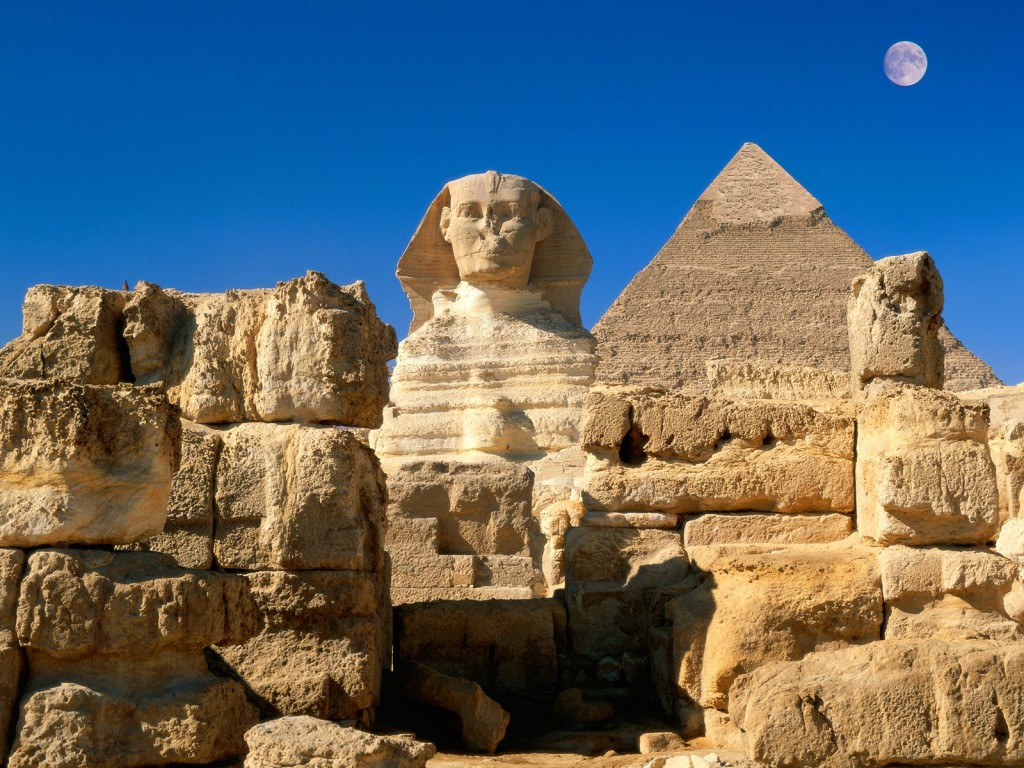
2. The Great Sphinx of Giza


Sphinxes are massive stone statues that depict the body of a reclining lion with the head and face of a human. The figures are found all over the world in different forms, but they are most commonly linked with Egypt, which features the most famous example in the form of the Great Sphinx of Giza. Incredibly, the statue is carved out of one monolithic piece of rock, and at 240 feet long, 20 feet wide, and 66 feet tall, it is considered to be the biggest monument of its kind in the world. Historians largely accept the function of the Sphinx to have been that of a symbolic guardian, since the statues were strategically placed around important structures like temples, tombs, and pyramids. The Great Sphinx of Giza appears to be no different. It stands adjacent to the pyramid of the pharaoh Khafra, and most archeologists believe that it is his face that is depicted on that of the statue.
The Mystery
Despite its reputation as one of the most famous monuments of antiquity, there is still very little known about the Great Sphinx of Giza. Egyptologists might have a small understanding of why the statue was built, but when, how, and by who is still shrouded in mystery. The pharaoh Khafra is the main suspect, which would date the structure back to around 2500 BC, but other scientists have argued that evidence of water erosion of the statue suggests that it is much older and perhaps even predated the dynastic era of the Egyptians. This theory has few modern adherents, but if true it would mean the Great Sphinx of Giza is even more mysterious than previously believed.


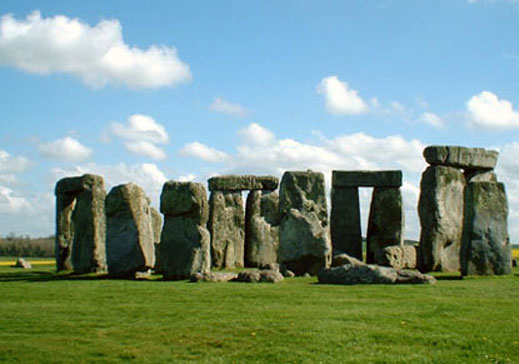
1. Stonehenge


Of all the world’s famous monuments, none has gained as much of a reputation for pure, simple mystery as Stonehenge. Stonehenge has been inspiring debate among scholars, scientists, and historians since the Middle Ages. Located in the English countryside, the landmark is believed to date back to 2500 BC, and consists of several mammoth pieces of rock arranged and piled on top of one another in what appears at first to be a random design. The site is surrounded by a small, circular ditch, and is flanked by burial mounds on all sides. Although the rock formations that still remain are undoubtedly impressive, it is thought that the modern version of Stonehenge is only a small remnant of a much larger monument that was damaged with the passing of time, and it is largely believed that the building process was so extensive that it could have lasted on and off for anywhere from 1500 to 7000 years.
The Mystery
Stonehenge has become renowned for puzzling even the most brilliant researchers, and over the years the many gaps in the history of its construction, the nature of its use, and the true identity of its builders have become known as “The Mystery of Stonehenge.” The Neolithic people who built the monument left behind no written records, so scientists can only base their theories on the meager evidence that exists at the site. This has led to wild speculation that the monument was left by aliens, or that it was built by some eons-old society of technologically advanced super-humans. All craziness aside, the most common explanation remains that Stonehenge served as some kind of graveyard monument that played a role in the builders’ version of the afterlife, a claim that is backed up by its proximity to several hundred burial mounds. Yet another theory suggests that the site was a place for spiritual healing and the worship of long dead ancestors.

weird world of micronations

A micronation is a tiny, self-proclaimed sovereign state. Though they claim sovereignty and are often not interfered with by larger government entities, they are not recognized as official independent states (which sets them apart from microstates like The Vatican or Singapore.) There are any number of reasons someone may start a micronation: as a joke, as a form of art, for protest purposes, as a political or legal experiment, or even to conduct criminal activity. Often times a strange legal quirk (or outright loophole) gives these micronations a unique legal status. Some of them are hilarious. Some of them are interesting. Most of them are, in their own way, bizarre, unique, and strange.

1. Principality of Sealand
Size: 0.00055 km2
Population: 27 (2002 estimate)
Ruler: Michael Bates

photo source

Sealand is probably the world’s most well known micronation, and this is probably because the stories behind it are bizarre and truly intriguing. The site of Sealand is about 10 km off the coast of England, and was originally a World War II sea fort designed to deter German air raids. In 1967, Paddy Roy Bates occupied the sea fort (then called Knock John) and used it to run an off-shore pirate radio station. He and his family have claimed it as an independent sovereign nation, including issuing passports. Bates claimed that the nation was granted de facto statehood when Germany sent a diplomat there, and a 1968 UK court ruling stated that because of its location in international waters, it is outside of British jurisdiction. This is connected to what is perhaps the most fascinating event in Sealand’s history, which took place in 1978. While Bates was away, Alexander Achenbach, who refers to himself as the Prime Minister of Sealand, along with several German and Dutch compatriots, staged an armed takeover of the facility.

photo source

They held Bates’s son, Michael, hostage for several days, later releasing him in the Netherlands. Bates enlisted armed help to aid him in recapturing Sealand, and raided it from helicopters. He held Achenbach and the others as prisoners of war, and while the others were released, Achenbach was not. Since he held a Sealand passport, he was charged with treason against the micronation and was held unless he paid a hefty fine. When the British government would not help, Germany sent a diplomat to negotiate his release. From time to time, rather extreme things like this have happened at Sealand, including an instance in 1990 in which a British ship was fired upon with rifles from Sealand for passing too close and “invading Sealand territory”. It was notably in the news once more in 2007, when torrenting gurus The Pirate Bay attempted to buy it in reaction to harsher copyright restrictions in Sweden, its homebase.

2. Republic of Molossia
Size: 58 km2
Population: 2-3
Ruler: President Kevin Baugh


photo source

Molossia is headquartered just outside of Dayton, Nevada, and consists of President Kevin Baugh’s home, back and front yards, and two properties he purchased in Pennsylvania and California. He styles himself after a dictator, right down to the military uniform and big sunglasses, and his micronation has been described as “a hobby taken to the nth degree.” He also claims a spot in the Pacific Ocean and 49,881 square miles on Venus. Molossia pays taxes to the United States, but officially labels this as “foreign aid”. A variety of bizarre things are banned in Molossia, including: guns, walruses, catfish, onions (and onion-like vegetables), and anything from Texas except pop star Kelly Clarkson.

3. Principality of Hutt River
Size: 75 Km2
Population: Around 20 residents and 13,000-18,000 overseas citizens
Ruler: His Royal Highness Prince Leonard I

Prince Leonard Casley at Hutt River Province    photo source

The Principality of Hutt River (formerly Hutt River Province) was founded by Leonard Casley in 1970. The micronation was formed when the five families owning farms in the Hutt River area became involved in a legal dispute with the government of Western Australia over wheat farming quotas. Essentially, the families had produced an amount of wheat that greatly exceeded what they were told they could legally sell under a new law (1,000 times the allowed amount, in the case of Casley himself).

photo source

In correspondence with the Governor, Casley was addressed as “The Administrator of the Hutt River Province”, legally entitling him to that title. He changed his title to “His Royal Highness Prince Leonard I” to take advantage of an old law stating that anyone interfering with a royal could be held for treason, and used this to justify seceding from Australia. In 1976, Australia Post stopped handling mail for the micronation, and repeated demands were made that the residents of Hutt River Province pay Australian taxes. Casley declared war on Australia as a result, and the mail began to run again (and the tax notices stopped coming.)

4. Other World Kingdom
Size: 0.02 km2
Population: Varies
Ruler: Her Royal Majesty Queen Patricia I

photo source

The Other World Kingdom is what happens when a BDSM and femdom resort in the Czech Republic declares itself a sovereign nation. It is a matriarchy, meaning that men are ruled by women, and below the queen (who is an absolute monarch) a various levels of nobility for women. The OWK’s stated purpose is to “get as many male creatures under the unlimited rule of Superior Women on as much territory as possible.” There are multiples classes for men as well, the lowest being slaves, who are stated to be “on the level of a normal farm animal.” The site, while small, consists of several buildings and outdoor areas, including multiple torture chambers. It retains its own passports, currency, police force, state flag, banners, and national anthem.

5. Waveland
Size: 784 km2
Population: 0
Ruler: Greenpeace


The geographical site of Waveland is more properly referred to as Rockall, a rocky, uninhabited island near the United Kingdom. Its ownership is disputed by the United Kingdom, Iceland, Ireland, and Denmark. In 1997, the environmentalist organization Greenpeace briefly occupied the island in order to protest oil drilling in the area, declaring it the sovereign new state of Waveland, and offered citizenship to anyone who would take their pledge of allegiance. Since the United Kingdom claims it as its own territory, and since Greenpeace is free to move and operate in the United Kingdom, the UK government had no problem with Greenpeace’s actions and, for the most part, simply ignored them. The protest continued until 1999, when the organization financially backing the project went under. Now, all that remains is a solar-powered beacon to help ships avoid hitting the island.

6. Grand Duchy of Westarctica
Size: 1,610,000 km2
Population: 0, usually
Ruler: Jon-Lawrence Langer, Grand Duke of Westarctica


Westarctica is a wild stretch of Western Antarctica, unclaimed until 2001, when an American by the name of Travis McHenry founded it via a supposed loophole in the Antarctic Treaty, a set of agreements regarding how the international community treats Antarctica. Essentially, the Antarctic Treaty prohibits countries from claiming territory in Western Antarctica, but it does not specifically prohibit individuals from doing so. McHenry claimed his territory, then founded a country. As micronational leaders often do, he sent letters to various world governments informing them of this, but was quietly ignored. Antarctica has no native human population, and as such Westarctica has no year-round citizens. However, some research facilities have been stationed there, and the micronation both prints stamps and mints coins, which are available to collectors for purchase. In 2005, McHenry tried to annex both the Balleny Islands and Peter I Island to grow Westarctica, but nobody really took it seriously – the land already belong to New Zealand and Norway, anyways.

7. Kingdom of Talossa 

Size: 13 km2 , plus a large stretch of Antarctica.
Population: 120
Ruler: King John I


 Flag of the Kingdom of Talossa  

14-year-old Wisconsin native Robert Madison founded the Kingdom of Talossa in 1979, initially claiming only his bedroom. As he grew up, he claimed more territory, eventually including a large part of Milwaukee’s East Side and two islands in Antarctica and France. Talossa developed in obscurity throughout Madison’s teen years, but was featured in notable publications like The New York Times and Wired, and subsequently appeared in newspapers and magazines world-wide. Most of Talossa’s “citizens” (more accurately “members”, perhaps) came to know Talossa through Madison’s website. Eventually, some of Talossa’s citizens became frustrated with Madison, suggesting that he had become autocratic and generally intolerable in his actions as leader, which included trumping up false charges of domestic abuse against one of his citizens. About 20 citizens seceded from the micronation, starting their own micronation called The Republic of Talossa. The most recent leader, John Woolley, was chosen in 2007, so this one is still going strong
Most Expensive Cigarettes

Luxury tobacco products are not anything new. When trying to come up with a list of expensive cigarettes, Dunhill, or Treasurer may come to mind. But Lucky Strike brought a whole meaning to an expensive pack of cigarettes by introducing this one-off pack in 2006. Lucky Strike commissioned one pack of smokes to be produced that proudly boasts 18ct white gold package that displays one large diamond and one large ruby.
most expensive pack of cigarettes

The most expensive pack of cigarettes was on display European airports in 2006 and also will have less expensive “look alike” packs for sale in the selected airports. This pack of cigarettes has a value of $100,000 and is intended to boost the iconic design and profile the Lucky Strike brand. Founded in 1871, the Lucky Strike logo has become internationally recognizable and easily marketable.

World’s Most Expensive Board Games


Whether played for family fun or intellectual stimulation, board games have a long history and some even predate the written word. It isn’t surprising, then, that some are willing to shell out thousands—or even millions—of dollars to purchase the most expensive board games in the world.
Zontik Games’ Trivial Pursuit – up to $6,200
World's Most Expensive Board Games - Zontik Games' Trivial Pursuit
A beautiful and luxurious leather-bound edition of this popular trivia game is being retailed by Zontik Games. The board is meticulously leather-inlaid by hand and then embossed in gold or silver with felt-lined storage compartments for the game pieces. The dice cups and question card boxes are also inlaid with leather. Optionally, the game may include pieces inlaid with sterling silver. This expensive Trivial Pursuit board is not available in Canada or the US.
Outrage! Deluxe – $12,465
World's Most Expensive Board Games - Outrage! Deluxe
In this game, players attempt to steal the crown jewels from the Tower of London. The board in this deluxe edition is laminated and set in a solid mahogany cabinet with a drawer for the sterling silver playing pieces, solid gold crown jewels and cards edged with gold leaf. The board also features an individually numbered brass plate.
World's Most Expensive Board Games - Kiseido Imports Go Set
Kiseido Imports Go Set – $12,950
This ancient Chinese game is often played with a traditional board with legs. A complete set also includes a pair of bowls to hold the players’ stones. Kiseido Imports offers a masame wood board with legs for $10,000, a set of yuki-grade shell and slate stones for $1,950 and pair of mulberry Go bowls for $1,000.
Charles Hollander Backgammon Set – $1.5 million or more

Created for the Charles Hollander Collection, this amazing board game features 61,082 black, white, and yellow diamonds totaling 2071.48 carats. The set also boasts over 6.77 kg of yellow gold and about 150 grams of silver. This masterpiece of art and jewelry required over 10,000 hours to create.
World's Most Expensive Board Games - Sidney Mobell Monopoly Set
Sidney Mobell Monopoly Set – $2 million
The most expensive Monopoly set is a special board created by jeweler Sidney Mobell. It was crafted with rubies, diamonds, sapphires and 23k gold. Even the dice are encrusted with diamonds.
World's Most Expensive Board Games - Jewel Royale Chess Set
Jewel Royale Chess Set – $7.8 million
This single chess set is the most expensive and exquisite game set of any kind in the world. Constructed of gold and platinum, it contains diamonds, emeralds, rubies, pearls and sapphires. The king alone weighs 165.2 grams of 18k yellow gold and has a spiraling mid-section graced by 73 rubies and 146 diamonds. Boodles, a British custom jewelry company commissioned its production.

World’s Most Expensive Yu-Gi-Oh! Cards

World's Most Expensive Yu-Gi-Oh! Cards - Crush Card Virus
Crush Card Virus (Shonen Jump)
The genesis of the Yu-Gi-Oh! Trading Card Game is interesting as far as collectible card games go. The Yu-Gi-Oh! franchise started as a manga series based around a fictional card game called Magic & Wizards (later called Duel Monsters). The first Yu-Gi-Oh! anime series was produced in 1998. It wasn’t until 2002 that the Yu-Gi-Oh! TCG became a reality. Now it holds a Guinness World Record for being the top selling card game in the world.
So what are the most expensive Yu-Gi-Oh! cards?
Crush Card Virus (Shonen Jump) – $599.99
This card was awarded to a winner of the Shonen Jump Championships. Its value may have dropped, however, as it has been forbidden as of the September 2009 ban list.
Gold Sarcophagus (Pharaoh’s Tour & Shonen Jump) – $2,195.00 or $399.00
World's Most Expensive Yu-Gi-Oh! Cards - Gold Sarcophagus
Gold Sarcophagus (Pharaoh’s Tour)
Awarded in both the Pharaoh’s Tour and Shonen Jump tournaments, this card is probably the most expensive Yu-Gi-Oh! card in the world. The Pharaoh’s Tour is the more valuable of the two.
Japanese Blue Eyes Ultimate Dragon with Armor – $500,000
Does this card exist? Despite a few mentions here and there of this half-a-million-dollar card, little or no solid information on this card is available.

Most Expensive Cruise Ship

In 2006, Royal Caribbean International embarked on an ambitious project called Project Genesis. Their mission was to build the world’s largest cruise ship. Scheduled to sail in fall of 2009, Project Genesis isn’t just the largest ship. It’s also the most expensive cruise ship in the world.
World's most expensive cruise ship
(via True Cruise)

Project Genesis isn’t Royal Caribbean International’s first enormous cruise ship. Their last endeavor, Freedom of the Seas, also broke records with its ability to carry over 4,000 passengers and its weight in excess of 150,000 tons.
Project Genesis will, of course, break both records. The 1,180 foot long ship will weigh 220,000 tons and carry a maximum of 6,400 passengers and 2,100 crew members. The ship is so big, in fact, that it will have a common area, as large as a football field, called Central Park. Central Park’s piazza will even host street performers and live concerts. Additionally, the park will be surrounded by a variety of restaurants, including fine dining at 150 Central Park, Italian cuisine at Giovanni’s Table and steakhouse fare at Royal Caribbean’s own Chops Grille.
The ship will also include a number of bars ranging from wine bars to the impressive Rising Tide bar—an engineering marvel that actually moves through three decks from Central Park to the public spaces below.
Norway’s Aker Yards is handling the construction of the ship. Their price for building the most expensive cruise ship in the world: $1.24 billion!